

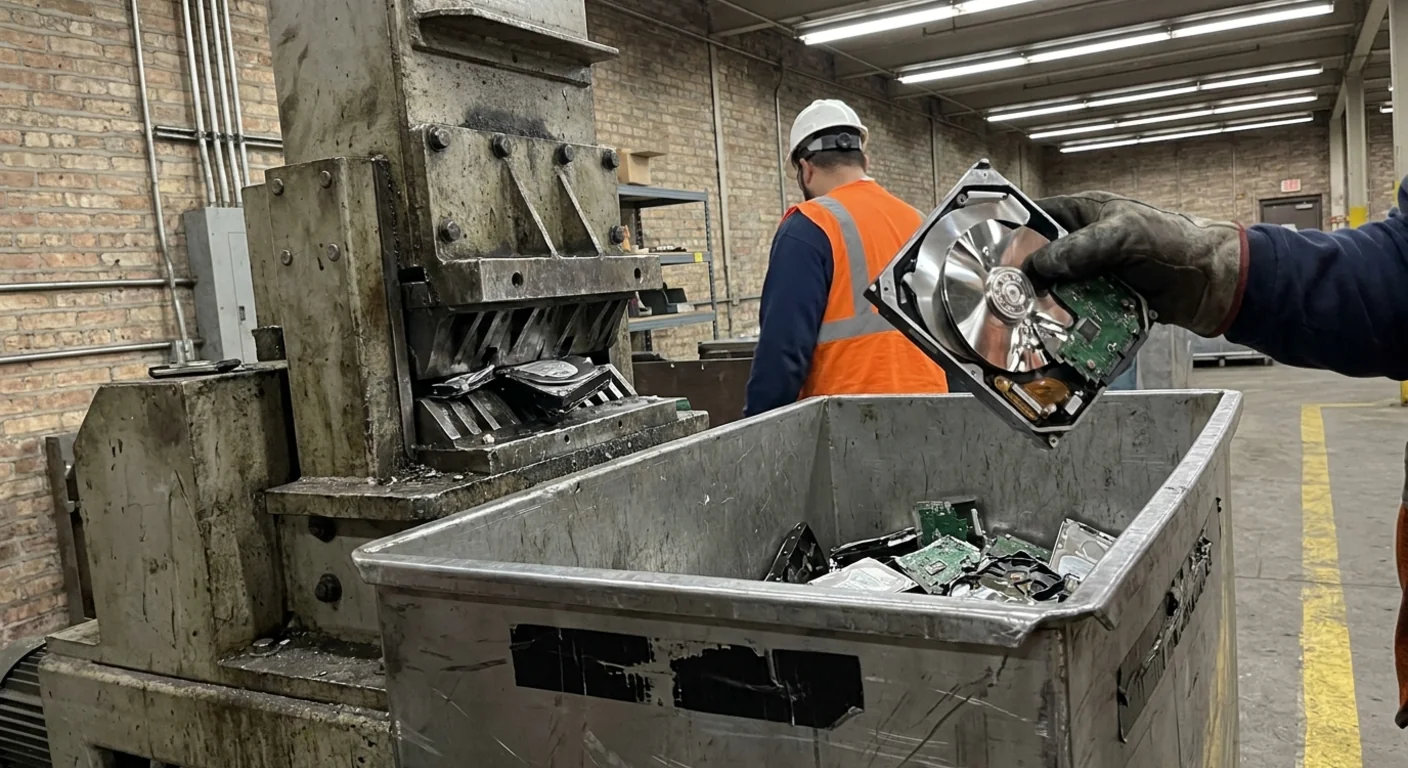
When businesses in Chicago dispose of old computers and servers, the question of data security becomes critical. Simply deleting files or reformatting drives leaves data vulnerable to recovery by unauthorized parties. Physical hard drive destruction offers the most reliable protection, but many organizations wonder what actually happens to their data and the hardware after the destruction process. Understanding the complete lifecycle from collection through final recycling helps businesses make informed decisions about protecting sensitive information while meeting compliance requirements.
1. Why Physical Destruction Matters for Data Security
Digital data lives on magnetic platters or memory chips inside hard drives and solid-state devices. When you delete a file or reformat a drive, the operating system simply marks that space as available for reuse. The actual data remains intact until overwritten. Sophisticated recovery tools can retrieve this information, creating serious security risks for businesses handling customer records, financial data, or proprietary information.
Physical destruction addresses this vulnerability by rendering the storage media itself unusable. Unlike software-based methods that attempt to overwrite data, physical destruction damages the actual components that store information. This approach is particularly important for drives that may have bad sectors where software wiping cannot reach, or for devices with firmware-level security concerns.
Chicago Shredder uses physical destruction methods designed to make data unrecoverable. The process focuses on damaging the platters in traditional hard drives and the memory chips in solid-state drives beyond any possibility of reconstruction. For organizations with strict security requirements, this approach provides the highest level of assurance that confidential information will not be accessed after disposal.
2. The On-Site Crusher at the Addison, Illinois Facility
Chicago Shredder operates an on-site hard drive crusher at the Addison, Illinois facility. This industrial equipment applies thousands of pounds of pressure to hard drives, permanently deforming the internal components. The crushing process bends platters, breaks circuit boards, and destroys the precise alignment required for data reading equipment to function.
The crusher handles various drive types including desktop hard drives, laptop drives, server drives, and solid-state drives. Each device is fed into the crusher individually, and the resulting material shows visible damage that confirms destruction. The process takes only seconds per drive, but the permanent deformation ensures that no data recovery technique can reconstruct the information.
This method aligns with the DoD 5220.22-M standard for physical destruction and follows NIST SP 800-88 guidelines for media sanitization. While DoD 5220.22-M is a standard rather than a certification, and NIST SP 800-88 represents guidelines rather than a certification program, both provide frameworks that inform secure destruction practices. The physical damage created by the crusher exceeds the requirements outlined in these documents for rendering data unrecoverable.
3. Shredding, Punching, and Wiping: Different Destruction Methods
Physical destruction encompasses several techniques beyond crushing. Shredding uses rotating blades to cut hard drives into small pieces, typically reducing drives to fragments less than one inch in size. This method completely separates the platters from the drive housing and breaks the magnetic surfaces into pieces too small for any data recovery attempt.
Drive punching uses a hydraulic punch to drive a hardened steel rod through the drive casing and platters. This creates a hole that destroys a portion of the data surface and damages the internal components. While effective, punching leaves larger sections of the platter intact compared to crushing or shredding, which is why Chicago Shredder primarily uses crushing for maximum security.
Software wiping represents a different approach entirely. This method overwrites data multiple times with random patterns, following standards like DoD 5220.22-M for software-based sanitization. However, wiping requires functional drives, takes significantly longer than physical methods, and cannot address hardware-level vulnerabilities or bad sectors. For businesses prioritizing maximum security, physical destruction removes these variables by destroying the storage medium itself.
4. Certificate of Destruction and Chain of Custody
After hard drive destruction, Chicago Shredder provides a certificate of destruction that documents the service. This certificate includes the date of destruction, the quantity of drives processed, and verification that the destruction occurred. For businesses subject to compliance requirements, this documentation serves as proof that data disposal followed appropriate security protocols.
Chain of custody tracking begins when drives leave your facility and continues through the destruction process. Chicago Shredder maintains records of when materials were collected, transported, and processed. This documentation helps organizations demonstrate due diligence in protecting sensitive information throughout the disposal process.
While Chicago Shredder does not guarantee compliance with specific regulations, the documentation is designed to support your compliance requirements under standards like HIPAA, GLBA, FACTA, and FERPA.
5. What Happens to the Hardware After Destruction
After the crushing process renders hard drives unusable, the destroyed materials enter the recycling stream. This secure process indicates that the recycling process follows responsible standards for environmental protection and worker safety.
The destroyed hard drives contain valuable materials including aluminum, steel, copper, and small amounts of precious metals. These materials are separated and sent to downstream processors who refine them for reuse in manufacturing. The recycling process recovers these resources while ensuring that no materials are knowingly disposed of in landfills.
The separation process uses various techniques including magnetic separation, eddy current separation, and manual sorting to divide materials by type. Circuit boards go to specialized processors who can recover gold, silver, and palladium. Metals are melted down and reformed into new products. This approach supports circular economy principles by keeping materials in productive use rather than extracting new raw materials from mining operations.
6. Data Disposal Considerations
Healthcare organizations in Chicago must address HIPAA requirements when disposing of electronic devices that stored patient information. The physical destruction of hard drives helps satisfy the requirement to render protected health information unusable and unrecoverable. Chicago Shredder's destruction methods and documentation are designed to support compliance requirements under HIPAA's Security Rule.
Financial institutions face similar obligations under GLBA and the Gramm-Leach-Bliley Act's Safeguards Rule. These regulations require appropriate disposal methods for customer financial information. The FACTA Disposal Rule extends these requirements to any business that maintains consumer reports or information derived from consumer reports. Physical destruction provides a clear method for meeting these disposal obligations.
Educational institutions handling student records must consider FERPA requirements, while publicly traded companies may need to address data disposal as part of SOX compliance programs. Chicago Shredder's services are designed to support compliance requirements across these various frameworks. The combination of physical destruction, documented chain of custody, and certificates of destruction helps organizations demonstrate appropriate data protection measures during the disposal process.
7. Why Local Chicago Businesses Choose Chicago Shredder
Working with a local service provider offers practical advantages for Chicago-area businesses. Chicago Shredder's proximity to clients throughout the metropolitan area enables responsive scheduling and convenient pickup arrangements. The company typically responds to service requests within one business day, making it easier to coordinate disposal activities around your business operations.
The Addison facility's location in the western suburbs provides easy access for organizations throughout Cook County, DuPage County, and surrounding areas. This local presence means shorter transportation distances, which reduces the time your decommissioned equipment spends in transit and minimizes the window of potential security exposure.
Beyond convenience, choosing a local provider supports the regional economy and reduces the environmental impact of long-distance transportation. For businesses with sustainability goals, this local processing aligns with objectives to reduce carbon footprint and support community-based recycling programs.
8. Frequently Asked Questions
Can data be recovered after a hard drive is crushed?
Data recovery from a crushed hard drive is designed to be unrecoverable. The crushing process permanently deforms the platters and destroys the precise alignment required for reading data. The physical damage exceeds the requirements outlined in DoD 5220.22-M standard and NIST SP 800-88 guidelines for media destruction.
Do you provide proof that hard drives were destroyed?
Yes, Chicago Shredder provides a certificate of destruction after processing your hard drives. This certificate documents the date of service, quantity of drives destroyed, and verification of the destruction process.
What happens to the materials from destroyed hard drives?
Destroyed hard drives are processed for material recovery. Materials including aluminum, steel, copper, and precious metals are separated and sent to downstream processors for refining and reuse in manufacturing.
How does hard drive destruction support HIPAA compliance?
HIPAA requires that protected health information be rendered unusable and unrecoverable when disposing of electronic devices. Physical destruction of hard drives meets this requirement by destroying the storage media itself. Chicago Shredder's destruction methods and documentation are designed to support compliance requirements under HIPAA's Security Rule.
Is crushing better than shredding for hard drive destruction?
Both crushing and shredding provide secure destruction, but they use different approaches. Crushing applies thousands of pounds of pressure to deform internal components, while shredding cuts drives into small fragments. Chicago Shredder primarily uses crushing at the Addison facility because it provides effective destruction while being efficient for processing large volumes of drives.
How quickly can you schedule a hard drive destruction pickup in Chicago?
Chicago Shredder typically responds to service requests within one business day. The company's location in Addison provides convenient access throughout the Chicago metropolitan area, making it easier to coordinate pickup schedules that work with your business operations. Call 866-770-2650 to discuss your specific timeline and volume requirements.
Understanding what happens to your data after hard drive destruction provides confidence that sensitive information receives appropriate protection. The combination of security, compliance support, and environmental responsibility addresses the multiple concerns organizations face when retiring IT equipment. If your Chicago-area business needs secure hard drive destruction services, contact Chicago Shredder at 866-770-2650 or schedule a pickup to discuss your specific requirements.
Ready to schedule a pickup?
Call 866-770-2650 or request a quote online. Every pickup includes clear service documentation.