

Tossing an old hard drive into the trash might seem harmless, but it exposes your business to significant data security risks. Even deleted files can be recovered by someone with basic software tools, putting sensitive customer information, financial records, and proprietary data at risk. Hard drives contain years of electronic footprints that standard deletion cannot erase. For Chicago businesses handling protected information, proper hard drive destruction is not just a security measure, it is a compliance necessity that protects your reputation and your clients.
1. The Hidden Risks of Trash Disposal
When you delete files or format a hard drive, the data remains physically present on the disk platters until it is overwritten. Recovery software can retrieve this information in minutes, making discarded drives a treasure trove for identity thieves and corporate espionage. A single improperly disposed hard drive can contain thousands of records including Social Security numbers, medical histories, banking details, and confidential business strategies.
Businesses face additional legal exposure when protected data falls into the wrong hands. Organizations subject to HIPAA, GLBA, FACTA, and similar regulations must demonstrate that they took reasonable steps to prevent unauthorized access to sensitive information. Simply throwing hardware in the trash fails this standard and can result in regulatory fines, legal liability, and reputational damage that takes years to repair.
The risk extends beyond digital recovery. Hard drives disposed in landfills contribute to environmental contamination through heavy metals and toxic materials. Illinois businesses have a responsibility to handle electronic waste properly, and hard drives should never end up in standard waste streams where both data security and environmental protection are compromised.
2. Physical Destruction: The Gold Standard
Physical destruction remains the most reliable method for ensuring data designed to be unrecoverable from retired hard drives. When the disk platters are crushed, shredded, or otherwise rendered physically unusable, the magnetic surfaces that store data are destroyed beyond any practical recovery method. This approach eliminates the risk that sophisticated recovery techniques might retrieve information from drives that were only digitally wiped.
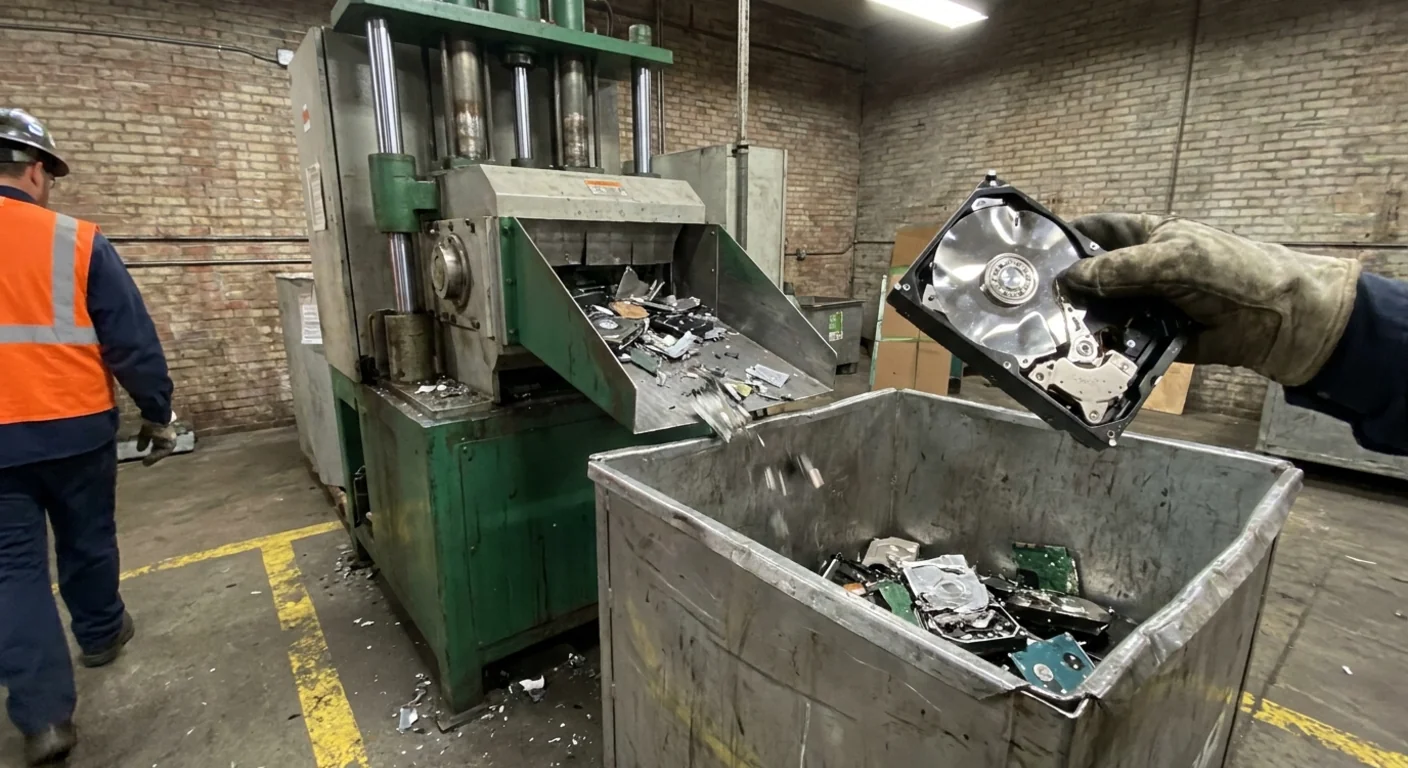
Chicago Shredder operates an on-site hard drive crusher at our Addison, Illinois facility, allowing clients to witness the destruction process if desired. This physical destruction method ensures that no data recovery is possible, providing the highest level of security for organizations with strict confidentiality requirements. The crusher reduces drives to small fragments, making reconstruction impossible.
Physical destruction is particularly important for drives that have stored highly sensitive information, failed drives that cannot be wiped through software methods, and situations where absolute certainty is required. While software-based wiping has its place in some workflows, nothing matches the finality and verifiability of physical destruction when security cannot be compromised.
3. Understanding Destruction Methods
Hard drive destruction encompasses several approaches, each with distinct security profiles. Shredding passes drives through industrial equipment that cuts them into small pieces, typically less than one inch, making reassembly and data recovery effectively impossible. This method is thorough but requires specialized machinery and creates material that must be properly recycled.
Punching or crushing creates holes through the drive platters or compresses the entire unit, destroying the magnetic surfaces where data resides. Chicago Shredder's on-site crusher uses this approach, physically deforming drives so that the platters cannot spin and read heads cannot access any remaining magnetic patterns. This method is quick, verifiable, and produces material suitable for downstream electronics recycling.
Software wiping overwrites existing data with random patterns, following standards like DoD 5220.22-M or guidelines such as NIST SP 800-88. While effective for drives being redeployed or resold, wiping requires functional drives and provides less absolute certainty than physical destruction. For drives reaching true end-of-life or containing highly sensitive information, physical methods remain the preferred approach for Illinois organizations with serious security requirements.
4. Compliance and Documentation
Organizations operating under regulatory frameworks need verifiable proof that data destruction occurred according to accepted standards. Chicago Shredder provides certificates of destruction documenting the date, method, and serial numbers of destroyed drives. This documentation supports compliance audits for HIPAA-covered entities, financial institutions subject to GLBA, and businesses handling consumer information under FACTA and similar regulations.
Chain of custody tracking ensures drives are accounted for from pickup through final destruction. Locked containers, manifests, and secure transportation prevent drives from being lost or accessed during the destruction process. For organizations with strict security policies, this documentation demonstrates that reasonable safeguards were implemented throughout the disposal lifecycle.
While Chicago Shredder's processes are designed to support compliance requirements, organizations remain responsible for understanding their specific regulatory obligations. Our destruction methods align with DoD 5220.22-M standard practices and follow NIST SP 800-88 guidelines where applicable, but compliance determinations rest with each organization and its legal advisors. We provide the secure destruction service and documentation that help businesses meet their data protection responsibilities.
5. More to Consider
This secure process demonstrates adherence to sustainable recycling practices, environmental standards, and data security protocols recognized throughout the industry. After hard drives are destroyed, the resulting material is processed according to supplier requirements, ensuring proper handling of hazardous components.
The review process includes regular audits, documented procedures, and environmental management systems that track materials from receipt through final disposition. This means your destroyed hard drives do not simply disappear into unknown waste streams. Instead, they enter a secure process where metals are recovered, hazardous materials are managed appropriately, and no materials are knowingly disposed of in landfills when viable recycling options exist.
This combination of secure destruction and secure, transparent recycling addresses both the data security and environmental stewardship concerns that Illinois businesses face. You can confirm that sensitive information was destroyed while also meeting corporate sustainability goals and environmental compliance requirements.
6. Why Chicago Businesses Choose Local Expertise
Working with a local provider offers practical advantages for Chicago-area organizations. Chicago Shredder understands the specific needs of Illinois businesses, from healthcare facilities in the medical district to financial services firms in the Loop to suburban corporate campuses. We provide pickup services throughout the Chicago metropolitan area, reducing the logistical complexity of transporting sensitive materials to distant facilities.
Our Addison location allows for convenient on-site witness destruction when organizations want to observe the crushing process firsthand. This transparency builds confidence that destruction occurred as specified and provides additional documentation for compliance purposes. Local presence also means faster response times when urgent destruction needs arise, with typical responses within one business day for scheduling requests.
Chicago businesses across healthcare, finance, professional services, education, and government sectors rely on secure hard drive destruction to protect their operations. Whether you are decommissioning a single server or clearing out an entire data center, the combination of physical destruction, secure recycling, and documented processes provides the security and accountability that modern data protection demands. For questions about hard drive destruction or to schedule a pickup, call 866-770-2650.
7. Frequently Asked Questions
Can data be recovered after a hard drive is physically crushed?
When a hard drive is properly crushed, the disk platters are physically deformed and the magnetic surfaces are destroyed, making data recovery designed to be unrecoverable through practical means. Physical destruction eliminates the risk that sophisticated software or laboratory techniques could retrieve information from the drive.
What happens to hard drives after they are destroyed?
Metals and other recoverable materials are separated for recycling, while hazardous components are managed according to environmental regulations, with no materials knowingly disposed of in landfills when recycling alternatives exist.
Do I need to remove hard drives from computers before pickup?
Chicago Shredder can handle complete computer units or individual hard drives depending on your needs. If you prefer to remove drives yourself, we can destroy only the drives, or we can accept entire systems and extract drives as part of our IT asset disposal service.
How does hard drive destruction support HIPAA compliance?
HIPAA requires covered entities to implement policies and procedures for disposal of electronic media containing protected health information. Physical destruction with documented certificates and chain of custody is designed to support these compliance requirements by ensuring data designed to be unrecoverable and providing audit documentation.
What is the difference between DoD 5220.22-M and NIST SP 800-88?
DoD 5220.22-M is a standard that specifies overwriting methods for software-based data sanitization. NIST SP 800-88 provides guidelines for media sanitization including clear, purge, and destroy methods, with destroy typically meaning physical destruction. Both recognize physical destruction as the most secure option for sensitive data.
Can I witness the destruction of my hard drives?
Yes, Chicago Shredder offers on-site witness destruction at our Addison, Illinois facility. Organizations can schedule appointments to observe their hard drives being crushed, providing additional verification and documentation for compliance purposes.
Disposing of old hard drives in the trash exposes your business to data breaches, regulatory penalties, and environmental liability. Whether you operate a small office or a large enterprise, proper hard drive destruction protects your organization and the people who trust you with their information. To schedule a secure pickup or learn more about our destruction methods, call 866-770-2650 today.
Ready to schedule a pickup?
Call 866-770-2650 or request a quote online. Every pickup includes clear service documentation.